Summer vs Winter Travel in Varanasi , is extraordinary in every season. But summer and winter deliver completely different experiences — and knowing which season suits your group, your purpose, and your priorities makes the difference between a good Varanasi trip and the perfect one.
This guide gives you the honest comparison — weather, crowds, costs, experiences, and the smartest booking approach for every season.
Summer vs Winter Travel in Varanasi
Varanasi Through the Seasons — Quick Overview
Varanasi has four distinct travel windows:
Winter (October to February): Peak season. Best weather. Highest prices. Most crowded.
Spring (March to April): Shoulder season. Warming weather. Good availability. Holi festival in March.
Summer (May to June): Hot season. Thinner crowds. Lower prices. Intense heat.
Monsoon (July to September): Rain season. Green and atmospheric. Some ghat flooding. Lowest prices.
Most travel guides simplify this to “visit October to March and avoid everything else.” The honest picture is more nuanced — every season has specific advantages for specific traveller types.
Winter Travel in Varanasi (October to February)
The Experience
Winter Varanasi is the most photographically spectacular and atmospherically powerful version of the city.
The morning fog rising from the Ganga — sometimes so thick that the opposite bank disappears and the ghats appear to float in white light. The cold air making the Ganga Aarti fire more vivid and the diyas on the water more brilliant against the darkness. The Ganga at its most aesthetically extraordinary.
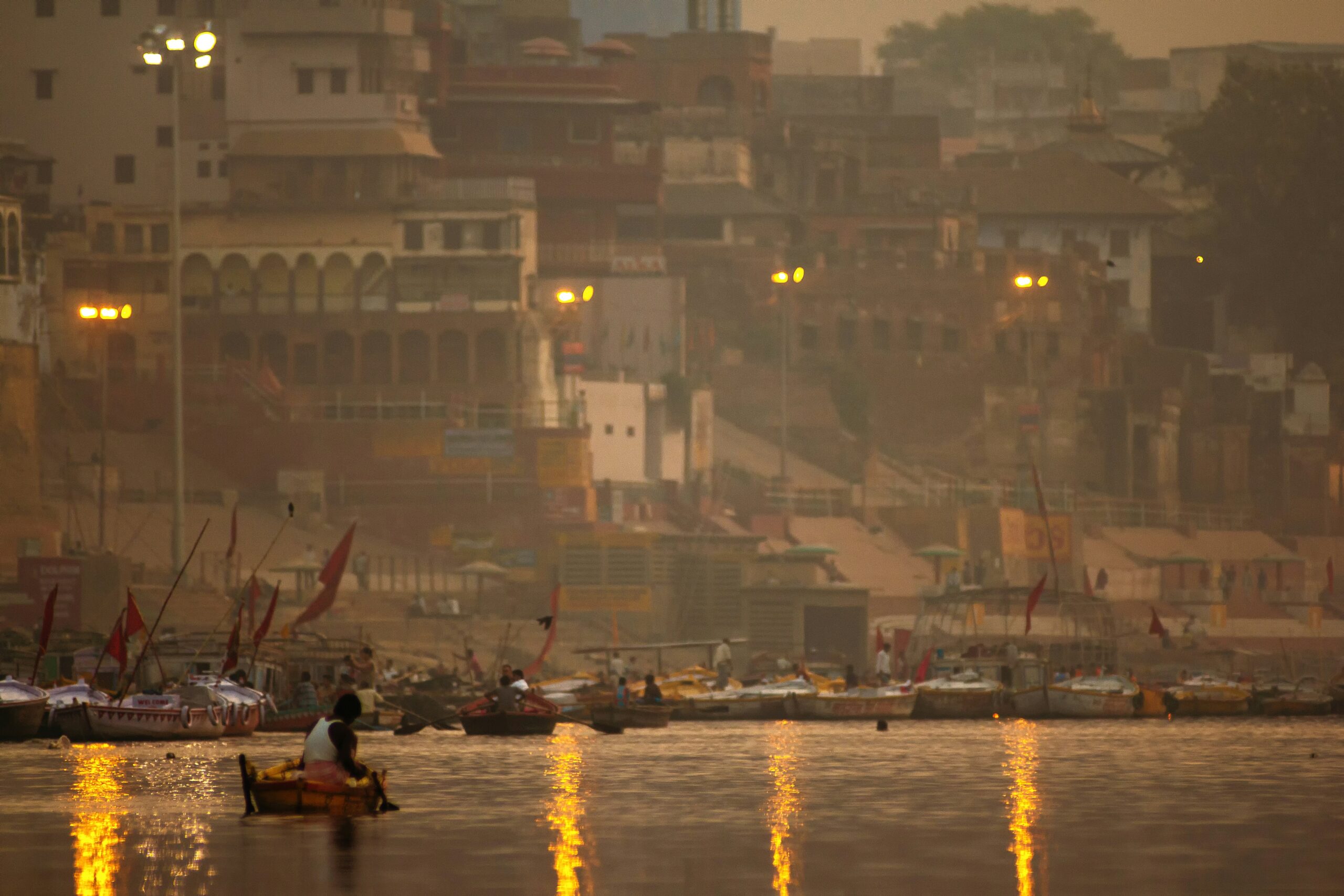
A Varanasi Boat Ride at 5:30 AM in December or January — with the fog lifting as the sun rises and the ancient city emerging through the mist above the ghat steps — is one of the most genuinely beautiful experiences available anywhere in India in any season.
Dev Deepawali — November (Peak Winter Experience)
The single most spectacular night in the Varanasi calendar. The entire 84-ghat arc illuminated with hundreds of thousands of diyas simultaneously — the Ganga glowing with reflected flame as far as the eye can see.
Dev Deepawali falls on Kartik Purnima — typically in November — and transforms Varanasi into the most visually extraordinary spectacle in India. A pre-booked private boat positioned on the Ganga during Dev Deepawali is the most remarkable visual experience the city offers in any season.
Book accommodation and boats for Dev Deepawali 90 days in advance — the city fills completely and premium properties sell out months ahead.
Winter Crowds and Costs
Winter is peak pilgrimage and tourist season. Every Varanasi weekend from October to February sees significant crowd build-up at Kashi Vishwanath, Dashashwamedh Ghat, and Sarnath.
VIP darshan at Kashi Vishwanath is non-negotiable in winter. General queues run 2 to 3 hours on peak winter weekends. ₹300 per person eliminates this completely.
Hotel rates: 40 to 60% higher than summer rates. Book 30 to 60 days in advance for any ghat-side property. Brijrama Palace and Taj Ganges fill completely during Navratri, Diwali, and Dev Deepawali.
Best winter months: November for Dev Deepawali. December and January for the most atmospheric fog mornings. February for pleasant weather with thinning crowds as peak season ends.
Winter Packing List
Heavy jacket or shawl for 5:30 AM boat ride — temperatures drop to 5 to 8°C at dawn in December and January. Warm layers for the ghat walk — the river air is significantly colder than the city. Comfortable walking shoes for extended temple circuits. Slip-on footwear for temple stops.
Winter Summary
| Factor | Rating |
|---|---|
| Weather comfort | ⭐⭐⭐⭐ (cool, clear, excellent) |
| Visual experience | ⭐⭐⭐⭐⭐ (fog, light, spectacular) |
| Crowd levels | ⭐⭐ (high — book VIP passes) |
| Hotel costs | ⭐⭐ (highest of the year) |
| Dev Deepawali | ⭐⭐⭐⭐⭐ (unmissable in November) |
| Overall rating | ⭐⭐⭐⭐⭐ — Best season |
Summer Travel in Varanasi (May to June)
The Experience
Summer Varanasi is the city at its most intense — and its most intimate.
The heat (40 to 46°C at peak) drives most leisure tourists away. What remains is the real Varanasi — the city as its residents and devoted pilgrims experience it throughout the year, without the tourist overlay that accumulates during peak season.
Kashi Vishwanath VIP queue in summer: 20 to 30 minutes versus 2 to 3 hours in winter. Dashashwamedh Ghat at the Ganga Aarti: manageable crowd versus dense winter pack. Sarnath: almost empty on weekdays versus tour-bus-filled in peak season.
For serious pilgrims who want unmediated access to Varanasi’s sacred sites — summer delivers an intimacy that winter cannot.
Sawan Month (July–August) — Sacred Summer Window
Sawan — the sacred month of Lord Shiva — is the most spiritually significant period for Varanasi’s Shiva devotee community. Kanwariyas (Shiva pilgrims carrying sacred Ganga water) arrive in enormous numbers. The Kashi Vishwanath Temple sees its highest daily darshan volumes of the year during Sawan Mondays.
For Shiva devotees completing the Sawan vow — visiting Varanasi during Sawan month is the single most auspicious timing possible. The heat is intense but the spiritual energy is extraordinary.
Summer Crowds and Costs
Hotel rates: 30 to 50% lower than winter peak. Same ghat-side guesthouses available at significantly reduced rates. Brijrama Palace and Taj Ganges have better availability and sometimes offer summer pricing promotions.
Cab and boat availability: Significantly better than winter. No advance booking scrambling for the right vehicle on the right date.
VIP darshan: Still recommended (₹300 per person) — but the time saving in summer is 1 hour rather than 3 hours.
Managing the Heat
Start by 4:30 to 5:00 AM. The Varanasi summer morning — before 8:00 AM — is genuinely pleasant. The sunrise boat ride at 5:30 AM is cooler and more mist-free than winter. The ghat walk and first temple circuit between 5:30 and 9:00 AM are manageable.
Rest from 11:00 AM to 3:00 PM. The midday heat in May and June is genuinely intense. Build a rest period into every summer day — hotel or ghat-side café — and resume the circuit in the late afternoon.
Evening circuit is excellent. Varanasi’s summer evenings — after 5:00 PM — are significantly cooler. The Ganga Aarti at 6:30 to 7:00 PM in summer happens in better light than the winter 6:15 PM ceremony.
Hydration is critical. Carry water bottles throughout the day. ORS sachets for anyone doing extended summer ghat walks. The kachori and lassi stops that are indulgent in winter are practically medicinal in summer.
Summer Summary
| Factor | Rating |
|---|---|
| Weather comfort | ⭐⭐ (very hot — 40–46°C) |
| Visual experience | ⭐⭐⭐ (clear skies, good light) |
| Crowd levels | ⭐⭐⭐⭐⭐ (minimal — best access) |
| Hotel costs | ⭐⭐⭐⭐⭐ (lowest of the year) |
| Sawan month | ⭐⭐⭐⭐⭐ (most sacred Shiva window) |
| Overall rating | ⭐⭐⭐ — Best for serious pilgrims and budget travellers |
Spring Travel (March to April)
The Experience
Spring is Varanasi’s most balanced season — warming weather, manageable crowds, and two of the most significant festivals in the Indian calendar.
Holi (March): Varanasi’s Holi celebrations are among the most extraordinary in India. The celebration begins at Manikarnika Ghat — where colours are played with ash from the sacred cremation fire — creating one of the most philosophically and visually striking Holi experiences available anywhere. The old city Holi at Varanasi is not for the faint-hearted but is genuinely unforgettable.
Ram Navami (April): The birthday of Lord Rama — one of the most significant dates in the Varanasi and Ayodhya pilgrimage calendar. Ram Navami at Varanasi sees special ceremonies at Tulsi Manas Mandir and throughout the Ram bhakti temple circuit.
Weather: March is pleasant (25 to 32°C). April warms significantly (32 to 38°C). Early morning ghat visits remain comfortable through both months.
Spring Summary
| Factor | Rating |
|---|---|
| Weather comfort | ⭐⭐⭐⭐ (March) / ⭐⭐⭐ (April) |
| Holi experience | ⭐⭐⭐⭐⭐ (March — unique in India) |
| Crowd levels | ⭐⭐⭐ (moderate — better than winter) |
| Hotel costs | ⭐⭐⭐⭐ (lower than winter peak) |
| Overall rating | ⭐⭐⭐⭐ — Excellent for festival seekers |
Monsoon Travel (July to September)
The Experience
Monsoon Varanasi is the city’s most atmospheric and most misunderstood season.
The ghats transform — the Ganga rises significantly, sometimes covering the lower ghat steps and occasionally flooding the approach lanes. Manikarnika and Harishchandra ghats continue operating through the monsoon. The Dashashwamedh Aarti continues every evening without exception.
The city turns extraordinarily green. The air is clean. The crowds are thinnest of the year. The Ganga at monsoon — high, fast, the colour of river silt, and carrying the rain of the Himalayas — is visually completely different from winter and carries its own powerful presence.
The limitation: Some lower ghat steps are submerged. Boat rides are reduced to specific safe stretches rather than the complete 84-ghat circuit. Sarnath and Ramnagar Fort visits are weather-dependent. Evening Ganga Aarti occasionally experiences brief rain interruptions (though continues).
The advantage: Complete Varanasi intimacy. Lowest prices of the year. Best availability. The city in its most unguarded and most genuinely lived version.
Monsoon Summary
| Factor | Rating |
|---|---|
| Weather comfort | ⭐⭐⭐ (warm, humid, occasional rain) |
| Visual experience | ⭐⭐⭐⭐ (green, atmospheric, high Ganga) |
| Crowd levels | ⭐⭐⭐⭐⭐ (emptiest of the year) |
| Hotel costs | ⭐⭐⭐⭐⭐ (lowest of the year) |
| Boat circuit | ⭐⭐ (limited by high water) |
| Overall rating | ⭐⭐⭐ — Best for budget travellers and adventurous visitors |
Season by Traveller Type — Quick Reference
| Traveller Type | Best Season | Why |
|---|---|---|
| First-time visitors | October–February | Best overall experience |
| Families with elderly | November–January | Best weather, manageable crowds with VIP passes |
| Budget travellers | May–June or July–September | Lowest prices, best availability |
| Sawan month pilgrims | July–August | Most sacred Shiva window |
| Dev Deepawali seekers | November | Most spectacular night of the year |
| Holi festival visitors | March | Most extraordinary Holi in India |
| Serious pilgrims | May–June | Most intimate access — thinnest crowds |
| Photography enthusiasts | November–January | Fog, light, and visual spectacle |
| Honeymoon couples | October–November | Best weather + Dev Deepawali possibility |
Transport and Hotel Booking by Season
Winter (peak season): Book Innova and Tempo Traveller through our Varanasi Cab Service at least 72 hours in advance. Book hotels 30 to 60 days ahead. Brijrama Palace and Taj Ganges — 60 days minimum.
Summer (off-season): Cab availability excellent with 24-hour notice. Hotels available with 48-hour notice. Better rates negotiable directly. Full packages at 30 to 50% lower total cost than winter.
For complete Varanasi packages across any season: Our Varanasi Tour Package and Varanasi Ayodhya Prayagraj Tour are available year-round with season-appropriate pricing.
Smart Seasonal Tips
Winter visitors: Always pre-book VIP Kashi Vishwanath darshan. Carry warm layers for 5:30 AM boat. Book ghat-side hotel 30 days in advance minimum.
Summer visitors: Start all sightseeing by 5:00 AM. Rest 11:00 AM to 3:00 PM. Hydrate constantly. Take full advantage of thin crowds for unhurried darshan at every temple.
Monsoon visitors: Confirm boat availability before arrival — high Ganga levels limit the circuit. Pack waterproof bag for electronics. Embrace the atmospheric green city rather than fighting the rain.
All seasons: Pre-booked private cab always beats random autos. VIP Kashi Vishwanath darshan always worth ₹300. Ghat-side accommodation always beats distant hotels.
FAQs
Q1. What is the best time to visit Varanasi?
October to February for the best overall experience — cool weather, atmospheric fog mornings, and Dev Deepawali in November. May to June for the most intimate pilgrimage access and lowest prices. Sawan month (July–August) for the most sacred Shiva devotion window.
Q2. Is Varanasi too hot in summer?
The heat (40 to 46°C) is intense but manageable with a 5:00 AM start and midday rest. Serious pilgrims consistently find summer’s thin crowds and intimate temple access worth the heat compromise.
Q3. What is Dev Deepawali and should I plan my trip around it?
Dev Deepawali — the Ganga illuminated with hundreds of thousands of diyas across all 84 ghats simultaneously — is the single most spectacular visual event in the Varanasi calendar. Yes — if November works for your schedule, plan around it. Book 90 days in advance.
Q4. Is Varanasi safe to visit during monsoon?
Yes — with awareness of ghat water levels and limited boat circuit. The city, temples, and Ganga Aarti all continue normally through monsoon. Only the lower ghat steps and complete boat circuit are affected by high water.
Q5. Can TripCosmos arrange Varanasi packages for any season?
Absolutely. Chat on WhatsApp for instant booking — share your travel dates and our team confirms the right package for your specific season, including weather-appropriate timing adjustments and seasonal pricing.
Varanasi is extraordinary in every season — the question is which extraordinary experience suits you best. Chat on WhatsApp for instant booking and TripCosmos confirms your complete Varanasi trip for your perfect season instantly.
Call / WhatsApp: 9336116210 | Website: www.tripcosmos.co